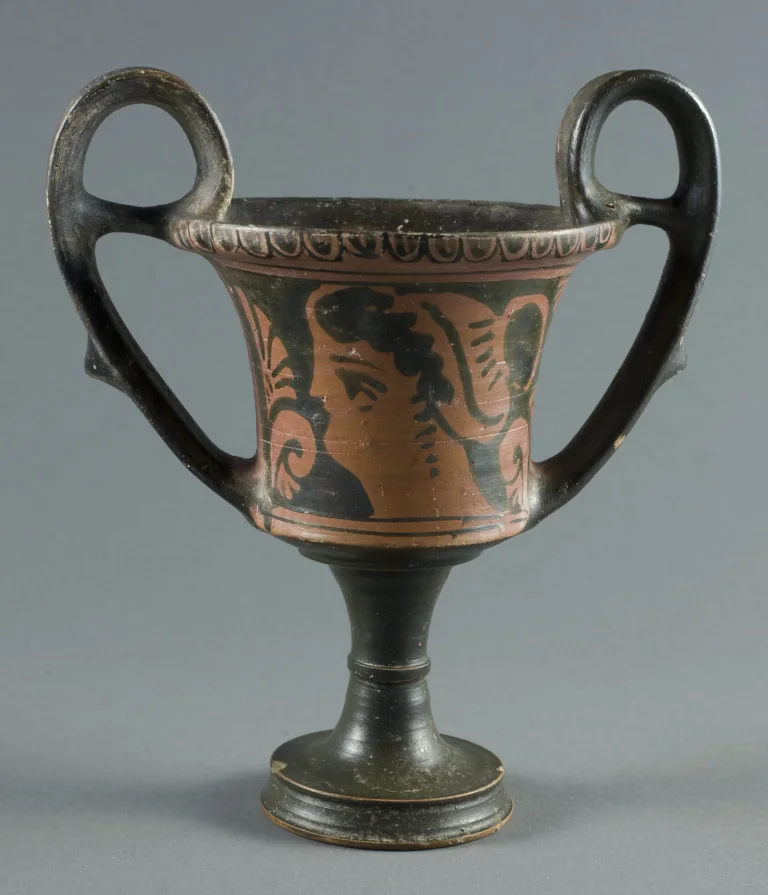
Kantharos (Wine Cup)
Kantharos (Wine Cup) is a work dated about 300 BCE, associated with Attributed to the Kantharos Group Greek; Apulia, Italy, in the collection of the Art Institute of Chicago.
History & Civilizations
A variety of artworks is ready to explore. Take your time admiring each one as you piece the puzzle together.
Kantharos (Wine Cup) is a work dated about 300 BCE, associated with Attributed to the Kantharos Group Greek; Apulia, Italy, in the collection of the Art Institute of Chicago.
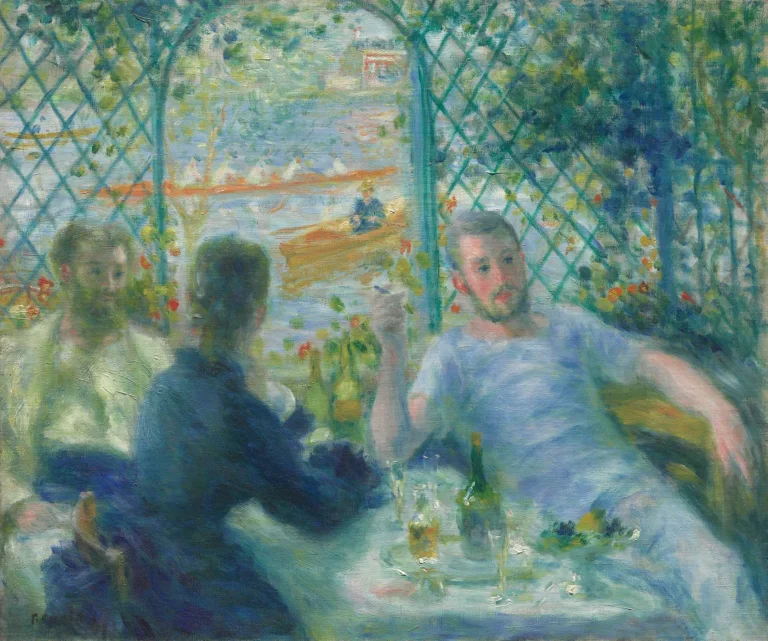
Lunch at the Restaurant Fournaise (The Rowers' Lunch) is a work dated 1875, associated with Pierre-Auguste Renoir (French, 1841–1919), in the collection of the Art Institute of Chicago.
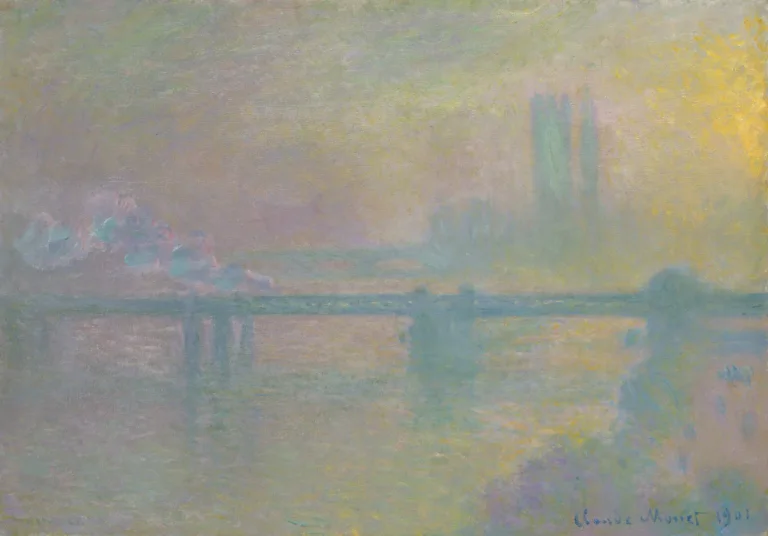
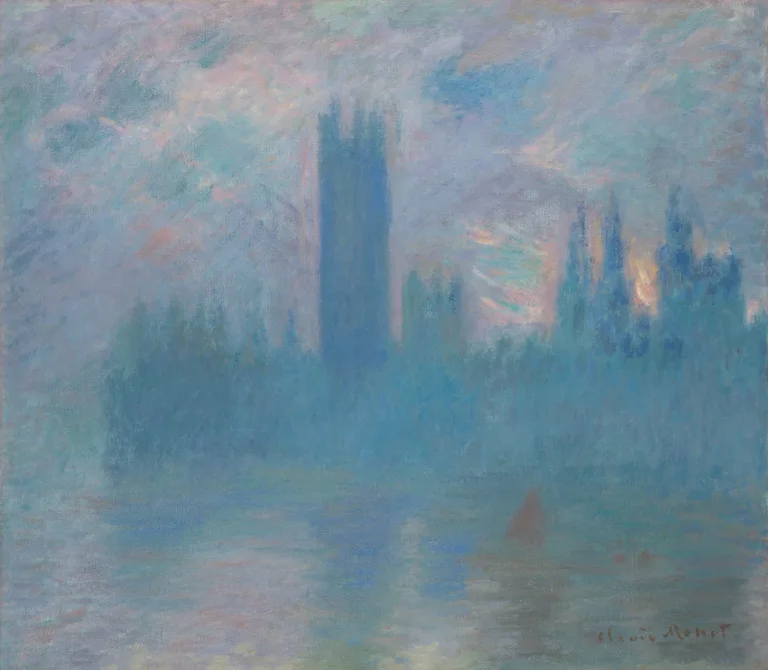
Beginning in September 1899, Claude Monet made almost 100 paintings of the river Thames. These works show only three different views—Charing Cross Bridge and Waterloo Bridge, both painted from the Savoy Hotel, and the Houses of Parliament, painted from Saint Thomas’s Hospital. In the smoggy, industrial city, Monet challenged himself to capture effects of light seen through a dense atmospheric screen.
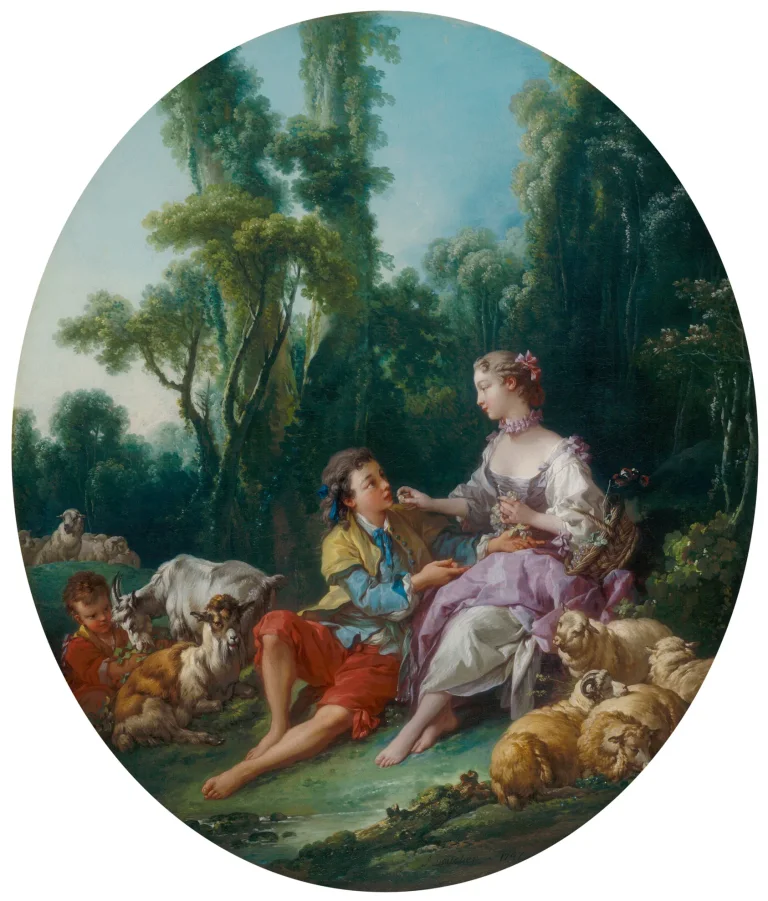
This painting is based on a 1745 pantomime about a young shepherd’s awakening love for a shepherdess. The couple feed each other grapes—a fruit associated with Bacchus, god of pleasure—suggesting that their encounter is not entirely chaste. François Boucher’s compositions on pastoral themes are his most influential contribution to 18th-century French art.
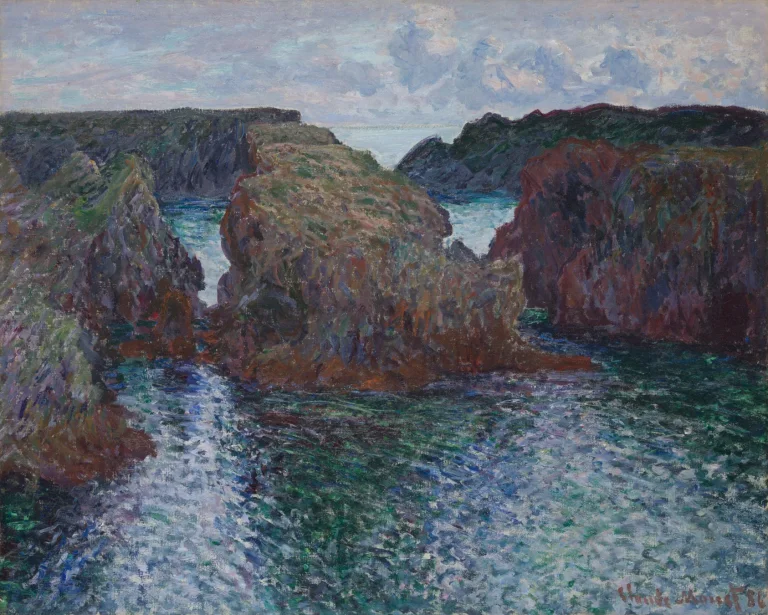
Belle-Île, a small island off the southern shore of Brittany, was known for its dramatic cliffs, rock formations, and grottoes. As he often did, Monet misjudged the time he would need to explore and capture the beauty of the place, which he variously called “lugubrious,” “terrifying,” and “very beautiful.” He came for two weeks and stayed for more than two months.
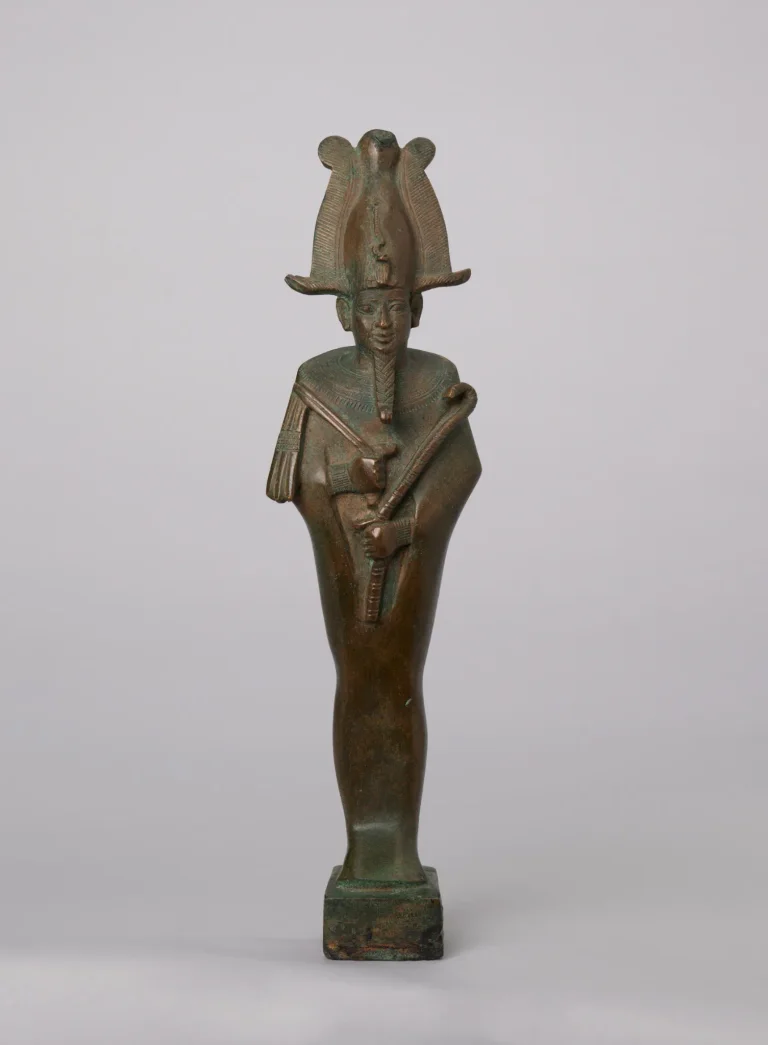
Ancient Egyptians purchased statuettes like this one from temple workshops and deposited them in temples or shrines. They made such offerings in thanks for answered prayers or to request good health, long life, and other favors from the gods. This finely cast statuette depicts the mummified Osiris, ruler of the underworld. The god holds a shepherd’s crook and a flail, symbols of royal authority that signify his role as Egypt’s first king.
Monet painted the Houses of Parliament in the afternoon and at sunset from a terrace at Saint Thomas’s Hospital. This viewpoint was close to that of the English artist J. M. W. Turner in his visionary paintings of the fire that had destroyed much of the old Parliament complex in 1834. In his response to the poetry of dusk and mist, however, Monet was actually inspired by the work of a more recent painter of the Thames, James McNeill Whistler.
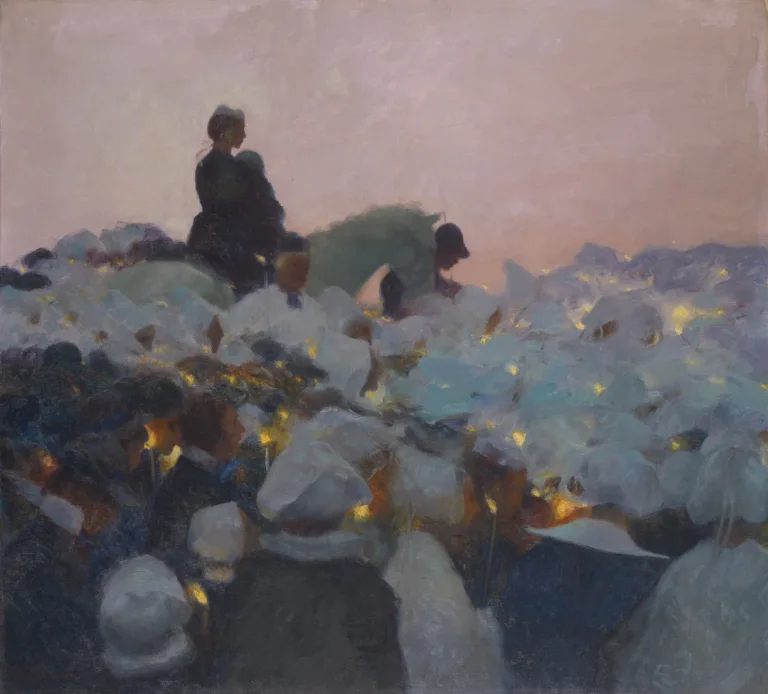
Pardon in Brittany is a work dated 1896, associated with Gaston La Touche (French, 1854–1913), in the collection of the Art Institute of Chicago.
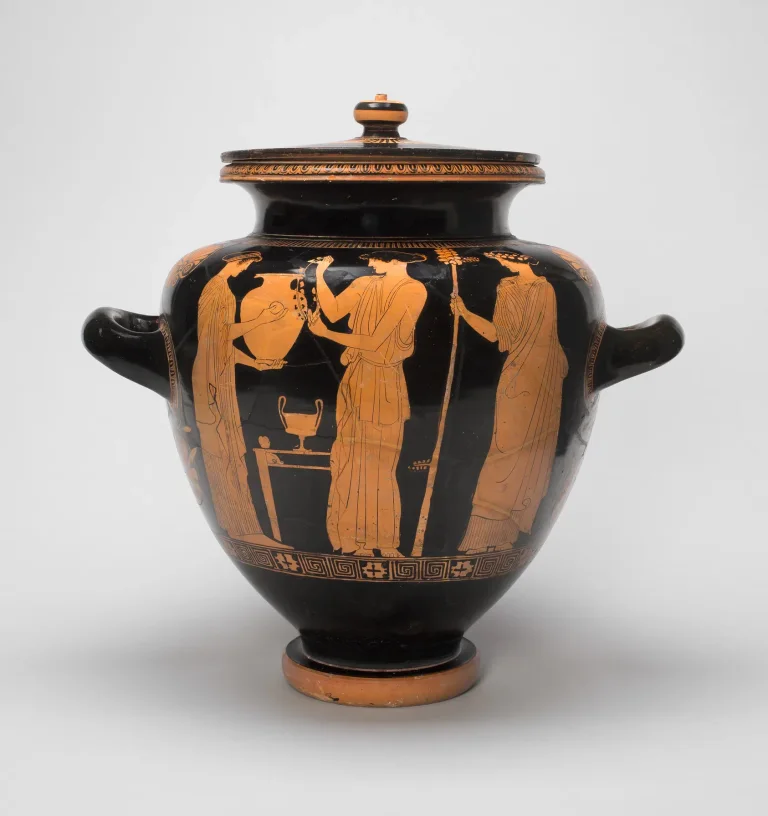
Among the first objects purchased for the museum's collection, this ancient Greek jar was originally used to mix water and wine. Painted in the red-figure style (so called because the figures remain the natural red of the clay), this vessel portrays the women followers of Dionysos, the Greek god of wine. Remarkably this millennia-old vase retains its original lid.