Chrysanthemums
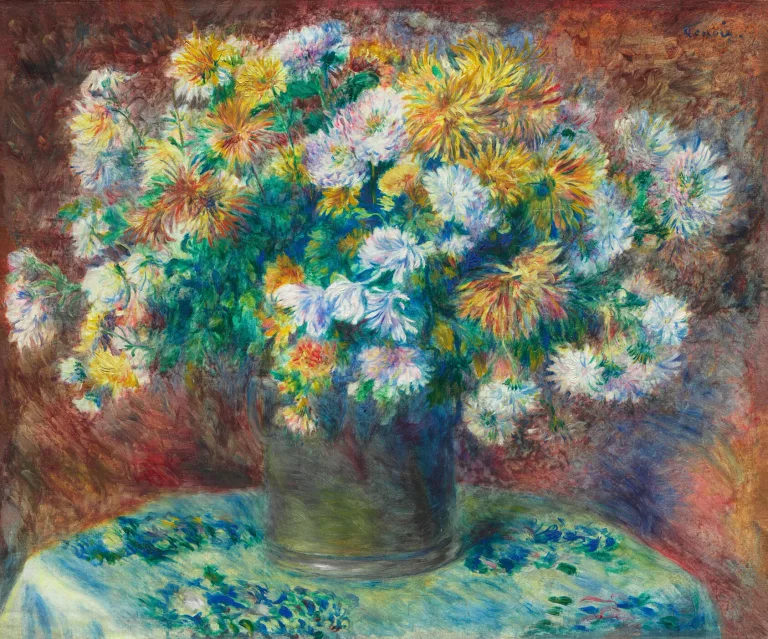
Chrysanthemums is a work by Pierre-Auguste Renoir, dated 1881–82, in the collection of the Art Institute of Chicago.
Classic MasterpiecesFlowers & Plants
A variety of artworks is ready to explore. Take your time admiring each one as you piece the puzzle together.
Chrysanthemums is a work by Pierre-Auguste Renoir, dated 1881–82, in the collection of the Art Institute of Chicago.
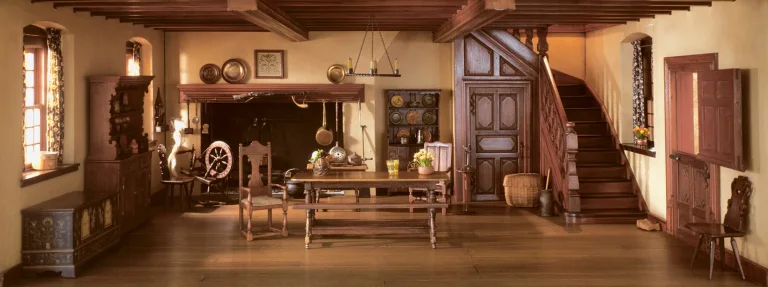
Narcissa Thorne aimed to design convincingly lived-in miniature interiors, so to contend with the absent fourth wall, she employed techniques of stage design. Here, for instance, the chairs around the kitchen table face outward, and the pieces of furniture are arranged so as not to obstruct one another. This careful placement allows viewers to see each element while also encouraging them to imagine scenes playing out within the space.
After World War I, many artists, including Piet Mondrian, believed that abstract art could contribute to a more harmonious society by communicating in a universal visual language. In 1917 Mondrian joined the De Stijl movement, which sought to develop a new aesthetic that corresponded to their utopian vision, and began developing his distictive style: compositions of off-white grounds divided by black lines that framed blocks of primary colors.
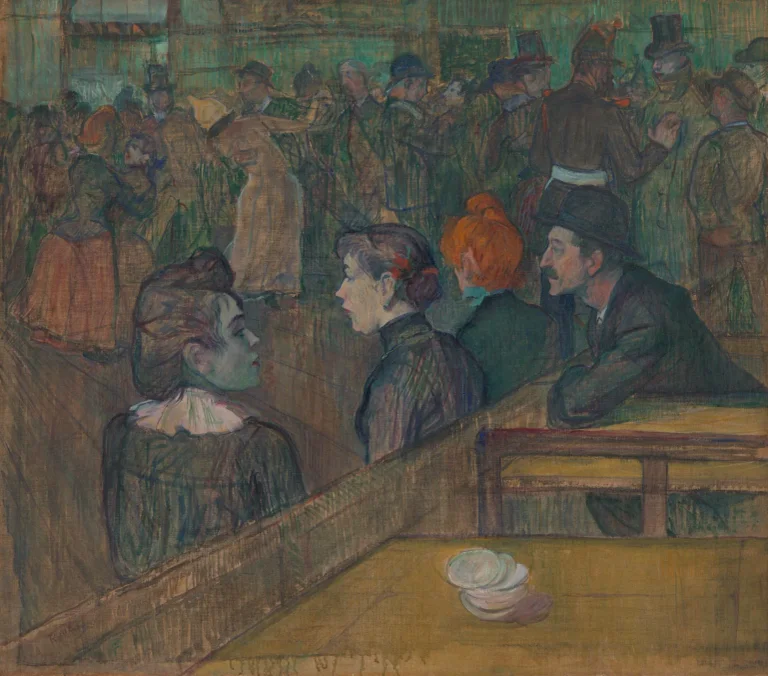
With this painting of the dance hall known as the Moulin de la Galette, Toulouse-Lautrec established his reputation as the chronicler of the Montmartre district’s famed nightlife. A wooden barrier bisects the composition, dividing the frenzied action of the dance floor in the background from the stillness of the women waiting in the foreground.
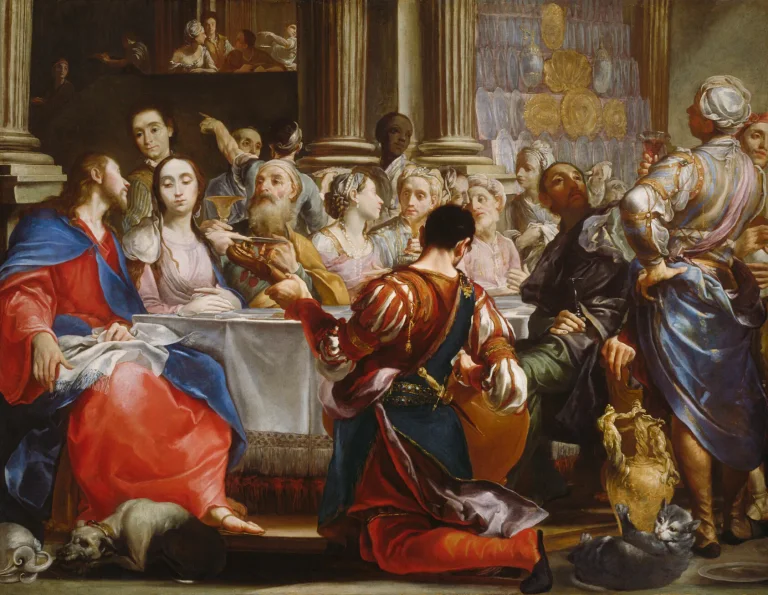
This depiction of the feast where Jesus performed his first miracle is filled with luxurious details and quiet, personal interactions. On the left, Jesus talks with his mother; on the right, the wedding’s astonished host and his servant taste the water Jesus has miraculously turned into wine. The piece brings together Venetian color and grandeur with the close character study popular in Crespi's native Bologna.
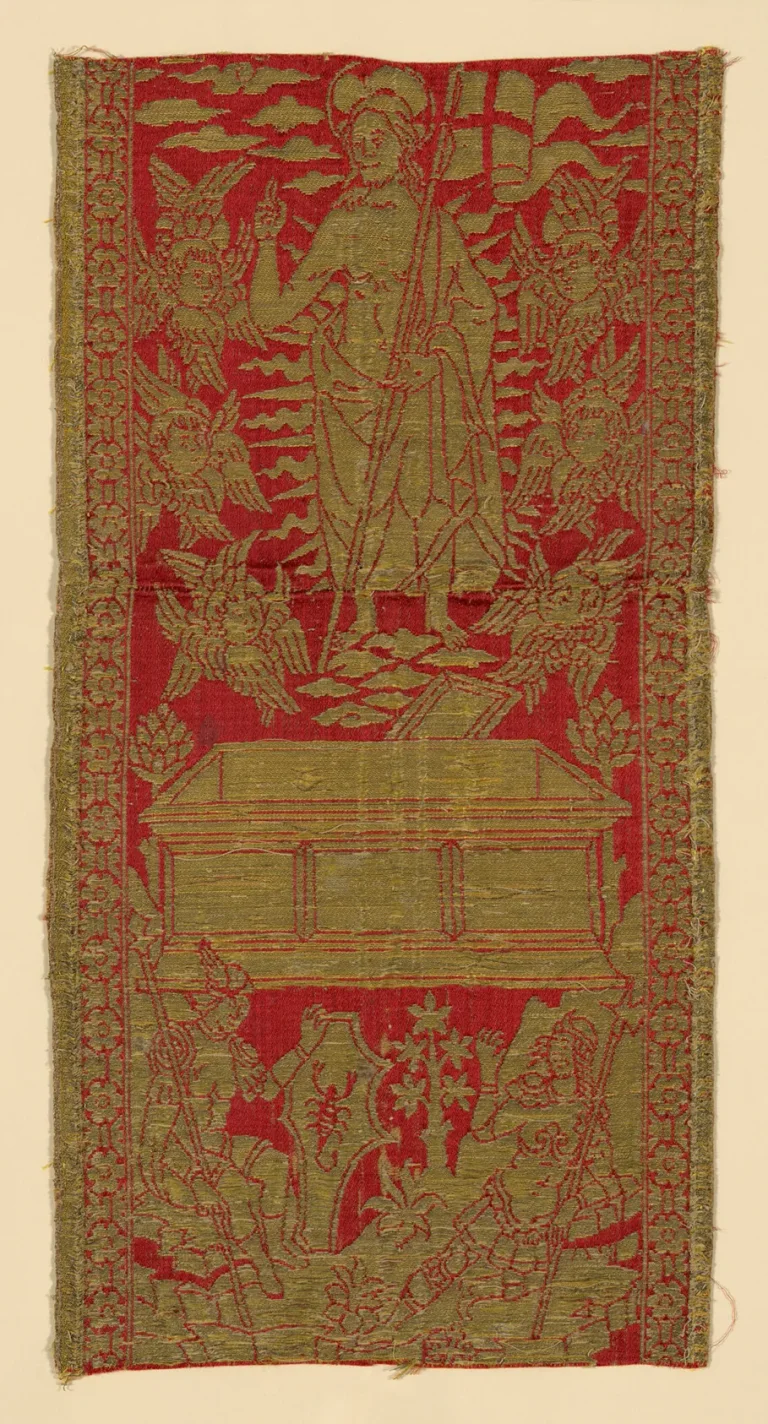
Fragment (From an Orphrey Band) is a work by Italy, dated 15th century, in the collection of the Art Institute of Chicago.
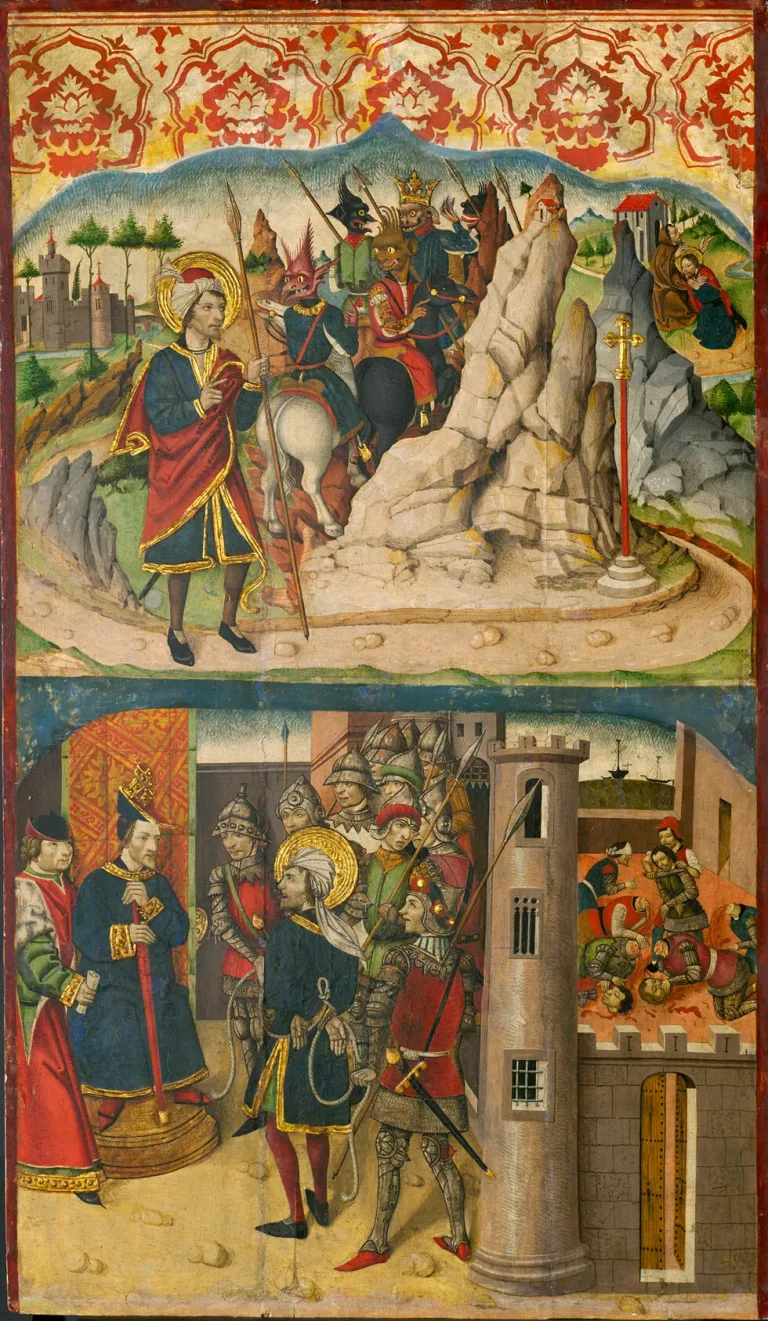
Saint Christopher Meets Satan; Saint Christopher before the King of Lycia is a work by Martín de Soria, dated 1480–85, in the collection of the Art Institute of Chicago.
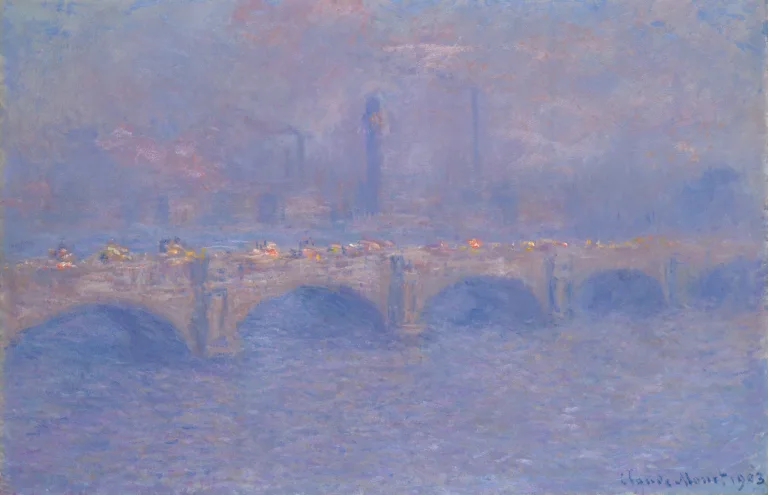
If not for the fog, Monet remarked, “London wouldn't be a beautiful city. It’s the fog that gives it its magnificent breadth.” While working on his London Series, Monet painted Waterloo Bridge early in the morning and moved on to Charing Cross Bridge at midday. He finished his London works in his Giverny studio, working until he was satisfied with them as an ensemble.
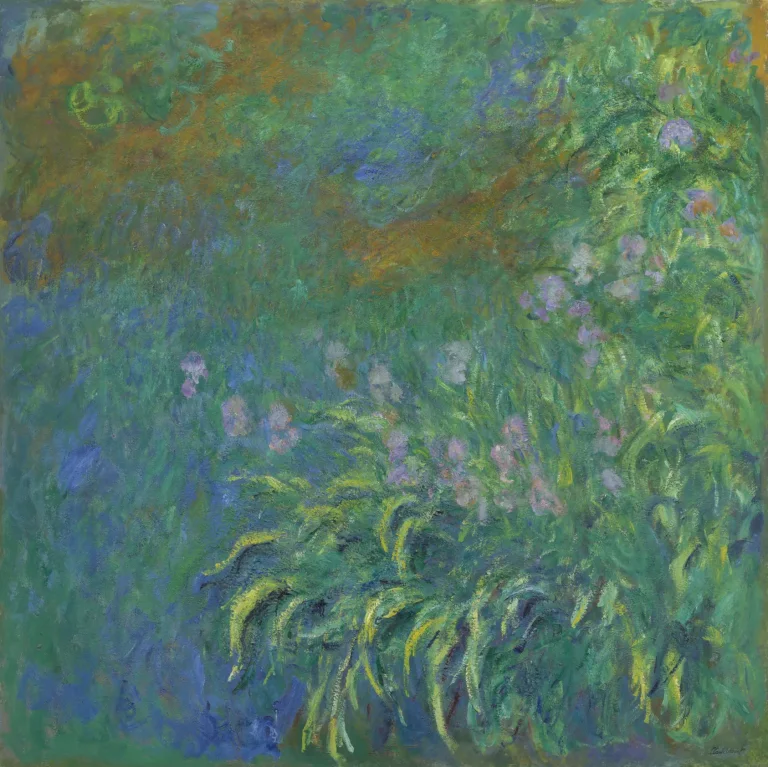
Irises is one of a series of paintings Monet undertook during World War I experimenting with familiar motifs on an ever-expanding scale. Lacking a discernible horizon or clear sense of depth, the viewer is both on top of and submerged its encrusted and disorienting surface. This work remained in Monet's studio long after his death in 1926 and was only rediscovered in the 1950s, having suffered damage by shrapnel from shells during World War II.